Umair Proposes Massive Disincentives. I Agree.

Umair Haque, whose commentary I enjoy very much, has a ranting post in reaction to what he calls the continued looting of the society thorough tthe current bailout plans.  He's got a great point in the lack of disincentives in the current financial set up:

To make better bankers, we have to give bankers disincentives.
Disincentives might revolve around the idea of liability, for example.
Doctors face a personal liability because of the human costs they might
impose. Bankers could too, given the clear and clearly massive costs
they're imposing on the rest of us.

Here's another kind of disincentive of a much more radical kind:
auctioning trading seats. If we auctioned seats on the trading desks of
the big banks, the problem of adverse selection would magically go
poof. Why? Because the bid price of a seat would rise to match the
expected value of benefits from trading, counterbalancing those
benefits, and diluting the incentive to loot.

For example, NYSE seat prices rise and fall with equity values – and
it's no coincidence that the bulk of fraud and deceit happened at
banks, not on exchanges. Auctioning trading seats in general would
offset massive bonuses with equally massive disincentives to loot.

I hear he'll be visiting Istanbul in April to participate in a conference.  I'm excited to get the chance to meet him.
Twitter Grew by 33% in February

According to Compete, Twitter grew to 8 million US users in February, roughly a 33% growth rate. (via SocialTimes)

This is huge.  even with the global financial crisis at full swing, I think many have learned from previously missed early buyout opportunities.  My guess is that Twitter gets sold by the end of 2009.

Inspired by Kaka

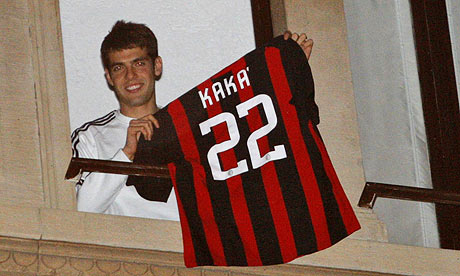
Milan's Brazilian superstar Kaka just rejected $700K per week in wages to stay at his club, turning down a transfer bid from Manchester City.  It is a truly inspiring move and I had to mention it.  And, it's not entirely unrelated to this blog's main themes.

AC-Milans-Kaka-shows-his--001

I try to focus my blog on value creation.  Wrongly, value creation is solely associated with transaction value.  However, time plays a tricky role in calculating the total value of any deal.  With his decision to stay at Milan,, I think Kaka's made the value maximizing choice for his career.

GM Deserves What It’s Got Coming

GM is about to die.  So, it's asking for a bailout.  According to Baris, it even took out advertising to rally citizen support to its bailout demands. What's wrong with this picture?

First, look at the chart below.  GM stock peaked in the late 90's?  Why? Is that because GM made cars that people craved?  Or is it because of its effective manufacturing innovation?  It's neither.  It peaked because it made gas guzzling bling cars.  And they sold well in the booming 90's.

I move on.  So now, they are bankrupt.  With about $50b of debt and huge payables.  And they are asking for a bailout.  If they get one, it will be a populist political decision, for future votes in some key swing states. 

And shamelessly, they are lobbying for support, spending money on advertising.  I protest as a taxpayer.

Let GM fail.

Gm

Reference? How Much?

Seth Godin touches on an interesting issue today:

What can you assume about your audience?

If you’re running a commercial, sending out a sales letter, making a presentation–what have they seen? What do they know?

Your audience isn’t as homogeneous as it used to be. That means you have a few choices:

1. Inquire. For a small group, or for important interactions, ask.
Ask if they’ve been to your site or read your recent blog posts. Ask if
they use this software or that software. Ask if they’ve seen Buckaroo
Bonzai or not. Ask if this is the first time in your restaurant (or
better yet, let your database tell you).

2. Assume. If you don’t ask, you’re going to have to guess. You can
make it clear you’re assuming, which puts the burden on the unclued to
keep up, or you can take a huge risk and just assume. This strategy
works best for large groups, where hitting a home run with half the
audience is probably worth the journey.

3. Punt. Don’t ask, don’t make thoughtful assumptions, just pretend
we’re living in a three-channel, all-on-the-same-page universe. I think
this is the default setting for most marketers, and quite a mistake.

It's a point I dwell on for a bit every time I blog.  If I am making a reference, how much background context should I provide.  If I mention Facebook or Yahoo, do I link to it?  I try to go the second round and assume.  But usually, I probably end up punting, since the assumptions are usually not that straightforward.  Asking is very difficult in the blogging environment.

Wow, heavy Seth influence on SortiPreneur today. :)   

Powerpoint

I frequently find myself presenting using slides and always feel like I am not doing as good a job as can be done.  I am very interested in effective presentation methods.  Seth Godin has periodically written about the topic and here's his latest.  I have never seen him speak but understand that he's quite a good deliverer of ideas.  His rules:

  1. Don't use Powerpoint at all.
  2. Use your own font.
  3. Tell the truth.
  4. Pay by the word. 
  5. Get a remote.
  6. Use a microphone.
  7. Check to make sure you brought your big idea with you. 
  8. Too breathtaking to take notes.
  9. Short!

For me, the most critical point is the last one.  Almost all presentations I listen to seem too long.  People must feel they are making a stronger point if they keep repeating it.

Guy Kawasaki, whose presentations I have seen, also has good posts on the issue.

Obama

I remember the pain I felt the day after the 2004 elections.  I had felt as if America, my then adopted home, had failed me.  Today, far away at my real home, I feel redeemed.  Today, Obama's election as the next POTUS will restore my faith in America.

Today is an important day.

Compensation

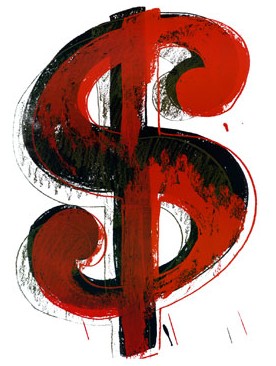
Warhol_Dollar_Sign
Roger Ehrenberg has a good post on the comp plans at the top of bailed-out banks. He takes Lehman's Fuld as an example:

For instance, consider a guy like Dick Fuld. In my scheme Dick would
have been holding a portfolio of these 10 year maturity/5 year
cliff-vesting options, meaning that he has 5 years of stock
compensation cumulatively tied up in the company at all times. Now
consider if this total compensation was weighted, say, 80-90% in these
options, such that he got enough cash to live very, very well, but that
almost all of his net worth was tied up in the stock. Tied up for 5
years. All the time. It is very hard to keep a fraud going for 5 years,
to fool the market for 5 years. So Dick, in my example, would have lost
almost everything when Lehman went down. Which is as it should be.
Highly compensated traders should be paid the same way, specifically to
avoid the kind of "swing for the fences" attitudes that permeated Wall
Street and amplified risk to reckless levels. All in the name of
current year compensation. This has been and will continue to be a
recipe for disaster unless a wholesale revamping of executive and
highly-compensated employee compensation is undertaken.

I agree with Roger for the most part.  However, at the end of the day, this is a supply and demand driven negotiation, where outsiders trying to regulate (i.e. mandate that banks structure pay packages a certain way) would be a disaster.  Typically, you have a board trying to hire the right CEO who will try maximize shareholder value.

Now imagine you're on the board of a bank with a $5b market cap.  You have two candidates you're considering for the CEO job and you feel one is a better fit.  You have to determine what it will take to bring on the two candidates and make a cost/potential benefit decision.  The total package cost you end up negotiating with both end up at similar ranges, but the candidate that seems like the better fit will not accept your fully-aligned comp plan (such as the one Roger proposes).  What do you do?

Given the potential impact of the right person on the market cap of the company (in this case, a 10% difference in performance would result in PV $500m of shareholder value), I think it would be short-sighted to force the fully-aligned package.  I would imagine many people had frowned on Jack Welch's package when he took the helm at GE, and there would have been plenty of similarly qualified managers who would have taken the role at a lower cost, but at the en d of the day Welch's enormous package looks like a rounding error in the shareholder value created at GE over his tenure.

I don't mean I am happy with the money made by the management at failed banks.  It's just that compensation is a complicated issue and free markets are a bitch. 🙂

Heads Hanging on Wall St.

I am a big fan of the dotted headshots (they call them "hedcuts") of The Wall Street Journal.  I’ve always assumed that they are pretty standard – that once the WSJ has created one for a business figure, it kept using the same image.

Well, apparently not.  Columbia Journalism Review reports that the hedcuts have been changing, with examples that show the change – reflecting a more somber mood in line with the market’s woes. (via SAI)

Pandit1

Pandit2
Paulson1Paulson2

Euros’ Rift Over Euros

I just read that German banking customers have been showing a preference towards Euro notes based on origin of issue, and exchanging those notes originating from Italy, Spain, Greece and Portugal, with those from Germany. (Thanks, Turgut!)


People clearly suspect that southern notes may lose value in a crisis,
or if the eurozone breaks apart. This is what happened in the US in the
Jackson era of the 1840s when dollar notes from different regions
traded at different values.

There is criticism of comments from Italian, Spanish,
and French politicians that threaten the independence of the ECB,
viewed as sacrosanct in Germany.

But the key
concern appears to be price stability. Germany’s wholesale inflation
rate reached 8.1pc in May, the highest level in 26 years.

This news story, against the backdrop of Euro 2008 Football Championship (and Turkey’s fantastic last 15-minute comeback against the Czech Republic!), is as entertaining as it is incredible.  Especially, the last sentence:

Many have kept a stash of D-Marks hidden in mattresses to this day. A
recent IPOS poll showed that 59pc of Germany now had serious doubts
about the euro.