How to Think About Your VC

I am reading Jeff Bussgang's book and came across a great quote.  If you are an entrepreneur talking to a bunch of VCs and trying to make sense of the process, or trying to decide if you can be partners with that guy across the table from you, I don't think you can go wrong this line of thinking from Twitter's Jack Dorsey:

Is this guy fun to work with? Is he going to challenge us? Is he smart? This person was going to take a seat on the board. I viewed it as a hire that we could never fire.

Is a Single Social Graph Healthy?

Facebook-connect-intro Facebook has made a few very important announcements this week.  It is now clear that they see themselves as a part of the software backbone of the Internet, with a increasingly-dominant sign-on and authorization ability, the new, atomized "like" button, and promising ambitions in the location and payments areas.

And, as Albert Wenger points out, they have executed very well on this very ambitious path, continuing to innocate at scale.

However, there's something I find disturbing in the dominance of any one company, at the core of the internet, which itself, has so far avoided this type of dependence, maybe except in the case of google.  However, Google, in its most dominant search and advertising verticals, does not constitute a single breaking point for the internet.  Take away Google Search, and Yahoo or Microsoft have products that work almost as well.  Take away Google Ads, and… well, nothing maybe.  Probably a massive drop in traffic to many sites and a commercial problem, but the internet works just as well, perhaps better, in providing us with the utility we expect from it.

Conversely, today, nobody else has the social graph data that we now rely on Facebook to provide for us as a web service.  And now many new services are being built on this layer.

If you read this blog, you know that I find the social graph extremely valuable.  I suspect that the single company domination of the social graph is dangerous and may have a stifling effect on the development of value-added services on top of the identity layer.  The strength of the internet has so far been its openness.  Had it been a Microsoft net or an AT&T net, no matter how innovatively executed, the internet would have fallen way short of what it enables today.

What would the alternative be?  If Sun had made the move to own the social graph, it would have been more authentically open. So far, Facebook has been somewhat open, but there are commercial pressures around Facebook that will strongly motivate it to misbehave in its shepherding of the social graph.  I hope that does not happen.

PS. Albert also declares he does not believe in a single social graph.  I actually do. I think the problem he points out is one that can be solved with intelligent search/find and filtering.

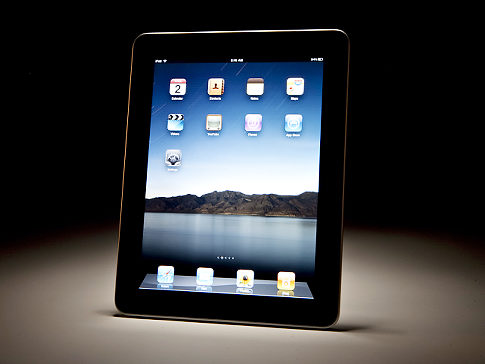
iPad First Impressions

Alg_ipad
I got a chance to play around with an iPad yesterday.  I wanted to record my first  impressions, to see if (or rather, how) they will change over time.

  • The screen is awesome.
  • The gestures are a bit more natural for me than the iPhone.
  • It really is a large iTouch.  But "large" makes a huge difference.
  • I wish it were kindle-light.  Not sure that it's as good a substitute for an e-reader.  However, if I'm traveling, I'll probably just grab one device, and naturally, it's the iPad.
  • The lack of a camera is a non-issue, at least in the first version.
  • I recently had a conversation about the differentiated advertising paradigm on an iPad.  I am now more convinced of it.  There will be new ways to advertise/interact with the audience on pads.
  • I wish it were open.  Would speed up development and foster creativity.

I remain convinced that it's a giant leap in UI and user experience. 

Complexity

Clay Shirky does not write very frequently, but when he does, it's often worth paying attention to.  His latest post is no exception.

Sriky is pointing out the changes in the media business and the inability of old media to comprehend them.  He summarizes his point in a fun way:

To pick a couple of examples more or less at random, last year Barry
Diller of IAC said, of content available on the web, “It is not free,
and is not going to be,” Steve Brill of Journalism Online said that
users “just need to get back into the habit of doing so [paying for
content] online”, and Rupert Murdoch of News Corp said “Web users will
have to pay for what they watch and use.”

Diller, Brill, and Murdoch seem be stating a simple fact—we will
have to pay them—but this fact is not in fact a fact. Instead, it is a
choice, one its proponents often decline to spell out in full, because,
spelled out in full, it would read something like this:

“Web users will have to pay for what they watch and use, or else we
will have to stop making content in the costly and complex way we have
grown accustomed to making it. And we don’t know how to do that.”

What Clay Shirky is identifying for the media industry, can be attributed to the Turkish business environment in the broadest sense.  It even includes businesses who were born to the connected economy.

My investments are built on one simple thesis:  That Turkey has lagged
comparable markets in the transition of economic activity to the
connected platforms.  I think there's enormous profit potential in this
situation, if the right exposure is attained.  And part of it comes
from the behavior of incumbents in the Turkish economy. I will be thinking more about specific examples and try to document them in this blog.

The iPad UI Shift

Marc Benioff (of Salesforce.com) has a thought-provoking piece on TechCrunch the future of software, emphasisizing, unsurprisingly, the cloud, and surprisingly, the iPad.

I have not yet seen or used the iPad but i agree with most of Marc's points.  I have stated that I think the iPad is being discounted using the laptop/smartphone paradigm, and that seems to me like a mistake.  The iPad will open new doors to creativity, similar to what Flash, iPhone and Facebook enabled.  And the new form factor will allow for uses not thought of right now.

And the fact that it's an Apple product will allow it to make it past Geoffrey Moore's bowling alley.  Many paradigm shift potentials get stuck there and the iPad will coast past it.  That's the Apple factor.

However, the most interesting part of Benioff's post is this for me:

In 1999, I was obsessed with the question, “Why isn’t all enterprise
software like Amazon.com? And in 2010, the question evolved: “Why isn’t
all enterprise software like Facebook?” This week we will have the
answer to that question in our hands with the iPad. It’s a more
productive, easier, and fun way to work and live. The iPad shows us the
old world is no longer good enough. We’ll need new software with a new
UI.

The last statement I agree with, and am excited about.  And the iPad is a product that certainly makes Benioff's statement possible and credible.

Culture is Important in Global Services

Fred Wilson had a very important post last week, examining the non-US growth of a few web properties, and concluding:

There's a lot of money "rest of world" and I suspect that will only be
more and more true over time. So we should start building web
businesses with that in mind.

The topic is very relevant to my business thesis, so i have been thinking about it over the weekend.  At the heart of the discussion is the notion of global web businesses.  The thinking here is pretty linear.  In capitalism, most businesses enjoy economies of scale.  In the connected, digital economy, since most physical points of friction are eliminated, the economies of scale allow for significant economic advantages to the largest players.  Therefore, it's natural to see large, global, dominant players emerging.  Fred is saying that these players will eventually have their non-US markets larger than their US markets and should behave with that in mind.

It makes a lot of sense.  And, we're already seeing this in action with Google dominating search in most countries, and Facebook killing all sorts of local social networks that preceeded it at the local level.

Is there not a segment of internet business that is inherently local?  I think there is.  And the secret sause there is cultural.  eBay has een very acquisitive in its global expansion.  However, the eBay acquisitions always come with their unique local flavors. It's in the community if not the product but all auction-based local ecommerce businesses I have seen have a unique cultural component.  The same is true for dating services, classifieds, recruitment sites…

I think it's very difficult to build, from scratch, a truly global service, except in pure technology-driven ventures (such as search, as in Google, or VoIP, as in Skype).  Each company is built with its own cultural unique points and then, as they expand globally, adopt or acquire practices that fit into other cultures.

Cisco’s Internet Impact with CRS-3

Two days ago, the tech sector was all ears in anticipation of Cisco's announcement that was going to, in the company's words, "forever change the internet".  Yesterday, following the announcement of CRS-3, Cisco's new, powerful router that can move up to 322 terabits per second, there seemed to be an air of disappointment.  Cisco stock was down slightly following the news.  My sense is that the market has been expecting a new business/product line, as Cisco's been getting closer to the consumer (via the Flip) and these days, announcements like this have been Apple's provenance with very cool consumer devices.

However, I think the announcement is extremely important, as it brings us closer to an "always connected" environment.  Cloud computing and multimedia streaming have been two huge ideas over the last couple of years, and the reason is that they contain an enormous value proposition, through optimization of resources at the network level.  This is dependent entirely on the bandwidth of the network.  And the routers can be a big source of bottleneck on the network. 

Two weeks ago, I had the chance to experience Cisco's telepresence offering and I can vouch that it was like nothing I have seen before.  The experience was virtually indistinguishable from an in-person meeting.  The CRS-3 is a critical step in beginning the proliferation of the bandwidth that makes such an experience possible, the elimination of the router
bottleneck and is a big step towards "forever changing the internet".

To close out, I want to relay a few soundbites from the announcement in terms of what the new router enables (via Mashable):

– the entire printed collection of the Library of Congress to be downloaded in just over one second

– every man, woman and child in China to make a video call, simultaneously

– every motion picture ever created to be streamed in less than four minutes.

The Open Finance Platform

My former partner Steve Richmond has a post on the very powerful idea of an open finance platform.  He's talking about a a bank/financial services account structure that has an API-like framework for third-party services to integrate and compete for customer attention in a marketplace environment.  I think it's brilliant.  Steve has been working with a few leading financial institutions and it's not that surprising to me that he's thinking about the intersection of financial services and the connected economy.

His vision is:

In this model, the bank owns your "profile," which sits with your
deposit account.  Apps use this profile to deliver services that are
interesting and valuable to you – and compete for your business openly
on the platform.  Data gets shared two ways, always with explicit
authorization of the user.  

Instead of billpay, you have a network of friends and vendors who you can easily transfer funds to.

In the US, the fragmented structure of financial services, and the state regulated banking environment may interfere with this kind of innovation. At one point, e-Trade seemed determined to change the way people banked.  PayPal started out with radical disintermediation, but got stuck in cheap p2p payments.  It was able to reduce friction in its core area, but did not spread wide outside of that.  Prosper took another aspect, the personal loan area, of financial services, but I am not sure how it's been going.  Anecdotally, I have been hearing bad news about default rates.

The platform idea is a radical one.  It's also one that probably will not grow out of the incumbent players in the market.  I'll be thinking about this idea.